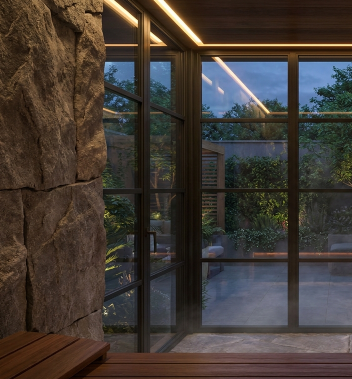
A well-built luxury sauna can run for well over a decade with a fairly short maintenance list: a wipe-down and dry-out after every session, a deeper clean once a month, a stone inspection every 3 to 6 months with full replacement every 1 to 2 years, and an annual check of door seals, hinges, and the electrical connection at the heater. Most of what shortens a luxury cabin’s life traces back to skipped basics, moisture left sitting on wood or glass, rather than any inherent weakness in premium materials. None of this maintenance is expensive or technical; it just has to actually happen on a schedule.
How often should you clean a luxury sauna after each use?
Every session should end with a quick wipe-down of the benches and floor using a soft cloth or a squeegee, removing sweat and moisture before it soaks into the wood grain. Leaving the door open for 20 to 30 minutes afterward lets residual humidity escape rather than sitting trapped against the panels overnight, which over months is one of the more common causes of dark staining or a musty smell in an otherwise well-built cabin. This daily habit takes under five minutes and does more for long-term wood condition than any deep clean performed less frequently, since it’s the accumulated moisture between sessions, not any single session, that eventually damages wood and hardware.
What does monthly maintenance look like for a luxury cabin?
Once a month, a more thorough clean is worth the extra time: vacuuming or sweeping any debris from bench boards and corners, checking the floor drain or mat for buildup, and inspecting the door gasket and hinges for wear. Luxury cabins with full glass walls also benefit from a monthly glass cleaning using a diluted vinegar solution or a cleaner labeled safe for sauna glass rather than a standard ammonia-based product, since ammonia can gradually degrade the rubber seals and gaskets that keep the glass panel airtight against the heated interior.


When do the heater stones need attention or replacement?
Heater stones take the most physical stress of any component, cycling through repeated extreme heating and, if water is used, rapid cooling as well. Most manufacturers recommend inspecting stones every 3 to 6 months, pulling out any that have visibly cracked or started crumbling, since damaged stones reduce heat retention efficiency and can eventually fall into the heating element. A full stone replacement is typically needed every 1 to 2 years for regular users, sooner for households using the sauna daily. Owners who bought through a specialty dealer such as SweatDecks often have an easier time sourcing replacement stones and heater parts sized correctly for their exact model, rather than guessing at a generic substitute.
How do you care for glass walls, hardware, and door seals?
Tempered glass panels common in luxury cabins hold up well structurally but need the gasket and seal around them checked at least twice a year, since a degraded seal lets heat escape and forces the heater to work harder to maintain temperature. Hinges and handles, especially on cabins used daily, should be checked for looseness or corrosion every few months and tightened or replaced as needed; stainless steel hardware resists this better than lower-grade finishes but isn’t immune to it. Door alignment is worth a periodic look too, particularly for outdoor cabins where seasonal ground movement can gradually shift a foundation and throw the door slightly out of true, which shows up as a draft along one edge before it becomes a visible gap.
What annual maintenance actually extends a luxury sauna’s lifespan?
Once a year, it’s worth having the electrical connections at the heater checked, confirming the circuit is still performing to spec and there’s no corrosion or loose wiring at the terminals, a job best left to a licensed electrician given the amperage involved. Interior wood should never be sealed or finished, since most sealants off-gas at sauna operating temperatures; if the wood surface has roughened from years of heat cycling, a light sanding restores the feel without adding any coating. Ventilation intake and exhaust vents should also get a yearly check to confirm they’re clear of dust or debris, since restricted airflow forces the heater to run longer per session and adds unnecessary wear across the whole system.
How does an outdoor luxury cabin’s maintenance differ from an indoor one?
Weather exposure adds a few items to the checklist. Exterior siding and trim should get a visual check each season for cracking, fading, or gaps at the seams, since UV exposure and temperature swings work on the outside of the cabin the way heat cycling works on the inside. Roofing or a sloped cap on an outdoor cabin needs the same debris check as any other exterior roof surface, particularly before winter, since standing leaves or snow load can affect the seal over time. The foundation or pad is worth a look each spring for any settling or cracking, which can gradually throw the door and panel joints out of alignment if left unaddressed for more than a season or two.
What early warning signs mean a repair is needed sooner rather than later?
A few signals are worth acting on quickly rather than waiting for the next scheduled check. A heater that takes noticeably longer to reach temperature than it used to often means either failing stones or a seal that’s no longer holding heat as well as it should. A persistent musty smell despite regular wipe-downs usually points to trapped moisture somewhere in the structure, sometimes behind a bench board, and is worth investigating before it affects the wood underneath. A door that no longer closes flush, or a draft along one edge, is frequently the first visible sign of foundation settling on an outdoor cabin. Catching any of these early is almost always cheaper and simpler than waiting until the underlying issue has spread further into the structure.
Frequently Asked Questions
How often should you clean a sauna after each use? Wipe down benches and the floor after each session and leave the door open for 20 to 30 minutes to let the cabin dry out fully.
How often do sauna heater stones need replacing? Inspect every 3 to 6 months and replace cracked stones as found, with a full replacement typically needed every 1 to 2 years.
Can you use regular glass cleaner on a sauna’s glass walls? Standard ammonia-based cleaner can degrade seals over time; a diluted vinegar solution or a cleaner labeled safe for sauna glass is the better choice.
Should you ever seal or treat the wood inside a sauna? No. Interior wood is left unfinished by design since most sealants off-gas at sauna temperatures; light sanding is the only treatment needed if the surface roughens.
References
- Cardiovascular and Other Health Benefits of Sauna Bathing: A Review of the Evidence, Mayo Clinic Proceedings, 2018
- Clinical Effects of Regular Dry Sauna Bathing: A Systematic Review, Evidence-Based Complementary and Alternative Medicine, 2018
- Effects of heat and cold on health, with special reference to Finnish sauna bathing, American Journal of Physiology – Regulatory, Integrative and Comparative Physiology, 2018
By Chris Hanley