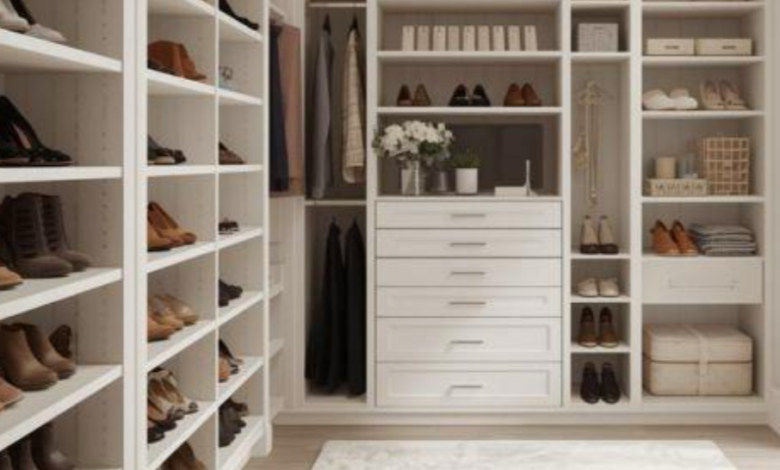
A custom walk-in closet is a dedicated storage room designed around your room size and daily needs. A wardrobe is not a separate concept—it is one of the built-in storage components inside a walk-in closet, such as tall cabinets with hanging space, shelves, or drawers. Unlike basic wire shelving or prefab systems, a custom closet is planned to fit your clothes, shoes, and accessories efficiently and neatly.
This guide explains the practical requirements for planning and building a functional custom walk-in closet, including how wardrobes fit into the overall design.
1. Measure the Space Correctly
Before any design work, accurate measurements are required.
You need:
- Total width, depth, and ceiling height
- Door location and how it opens
- Windows, vents, electrical outlets, or sprinklers
- Wall structure (drywall, studs, concrete)
Basic guidelines:
- Walk-in closets usually need at least 5–6 feet of depth
- Comfortable walking space is 36–42 inches
If measurements are wrong, the entire design will fail.
2. List What You Need to Store (Wardrobes Are Part of This)
Design should be based on what you own, not on photos from the internet.
Make a simple list. These items are typically stored inside wardrobe units within a walk-in closet:
- Long hanging clothes (dresses, coats)
- Short hanging clothes (shirts, jackets)
- Folded clothes that need drawers
- Shoes (how many pairs)
- Bags, belts, ties, jewelry
- Seasonal or bulky items
This step decides how much hanging space, shelving, and drawers you need.
3. Choose the Walk-In Closet Layout
The room size determines the layout.
Common layouts:
- Single-wall: small walk-in or narrow rooms
- L-shaped: storage on two walls
- U-shaped: storage on three walls for maximum capacity
- Island layout: large walk-ins with center drawers
A good layout prevents overcrowding and keeps the closet easy to use.
4. Select Materials
Materials affect durability, appearance, and cost.
Common options:
- Melamine / laminated panels: affordable and easy to maintain
- Painted MDF: smooth finish, modern look
- Plywood with veneer: stronger and longer-lasting
- Solid wood: highest cost and durability
Also consider drawer construction, shelf thickness, and edge banding quality.
5. Hardware and Accessories
Hardware improves functionality.
Typical additions:
- Soft-close hinges and drawers
- Pull-out shoe racks
- Belt and tie organizers
- Jewelry trays
- Valet rods
- Built-in hampers
These are optional but help keep the closet organized.
See also: Industrial Elegance: How to Build a Home That Stands Out
6. Lighting
Lighting makes the closet usable.
Best practices:
- LED strip lighting inside shelves and hanging sections
- Motion sensors for automatic on/off
- Warm white light (around 3000K)
Poor lighting makes even a well-built closet frustrating to use.
7. Doors and Mirrors
Closets can be open or closed.
Options include:
- No doors (open walk-in)
- Sliding doors
- Hinged wardrobe doors
- Mirror panels
- Glass or frosted doors
Door choice depends on space and privacy needs.
8. Budget Range
Typical installed costs in the US:
- Reach-in wardrobe: $1,200–$3,500
- Standard walk-in closet: $3,000–$7,000
- High-end custom closet: $8,000+
Costs vary based on materials, accessories, and labor.
9. DIY vs Professional Installation
- DIY systems: cheaper, limited flexibility
- Custom closet companies: better fit and faster installation
- Cabinet makers: highest quality, highest cost
Choose based on budget and how customized you want the result to be.
Conclusion: How Wardrobes Fit Into a Walk-In Closet
To build a custom walk-in closet or wardrobe, you need accurate measurements, a clear list of storage needs, a functional layout, durable materials, proper lighting, and a realistic budget. When these basics are done correctly, the closet will work well for years without needing changes.